
Ten Essential Contractors to Hire Before Selling Your Home
The modern real estate market has shifted dramatically in the last decade. There was a time when “sweat equity” was a buzz phrase for buyers; people looked for homes they could fix up themselves to build value. Today, however, the vast majority of buyers—especially first-time millennials and busy professionals—are looking for “turnkey” properties. They want to unpack their boxes, set up their Wi-Fi, and start living. They are often stretching their budgets to the max to afford the down payment, leaving little cash reserves for immediate repairs or renovations.
Because of this shift, the seller who presents a polished, well-maintained product wins. When a buyer walks through a home, they are subconsciously keeping a tally of “to-dos.” Every squeaky floorboard, every water stain, and every overgrown bush adds a dollar sign to their mental calculator. When that calculator hits a certain threshold, they either walk away or submit a lowball offer that accounts for the “hassle factor.”
To maximize your sale price and minimize the time your property sits on the market, you need to think less like a homeowner and more like a project manager. It is not about renovating the home to your personal taste; it is about neutralizing the space and eliminating red flags. This often requires professional help. While DIY solutions are great for living, professional invoices and warranties are what sell houses. They provide proof of care and transferable security to the new owner.
Below is a comprehensive guide to the ten types of professionals you should consider hiring before you ever plant that “For Sale” sign in the yard.

Ensuring Structural Integrity and Dryness
Before you worry about paint colors or granite countertops, you must address the “bones” of the house. The most common deal-killers in real estate are not ugly kitchens; they are structural concerns and water issues. These are the problems that keep buyers up at night and scare off mortgage lenders. If your home has issues in these areas, no amount of staging will hide them from a competent home inspector.
Protecting the Asset from the Top Down
The roof is your home’s first line of defense against the elements, and it is the first thing a buyer sees when they pull up to the curb. A roof that looks old, moss-covered, or damaged immediately signals “expensive problem” to a buyer. You do not always need a full replacement to satisfy a buyer, but you do need certainty.
Many sellers make the mistake of relying on a general handyman to patch a leak or replace a few shingles. This is a mistake. When you list your home, you want to be able to present a receipt from licensed roofers who have inspected the system and certified its condition. Buyers love paperwork. Being able to hand over a “Roof Certification” that states the roof has another 5 to 10 years of life left is a powerful negotiation tool.
If your roof is borderline, consider this: a new roof is one of the few exterior improvements that offers a very high return on investment because it is a capital improvement. If you cannot afford a full replacement, ask a professional to perform a “tune-up.” This involves replacing cracked pipe boots (the rubber seals around vent pipes that often rot), securing loose flashing, and clearing gutters. This minor investment prevents the inspector from flagging “potential leaks” on their report.
Eliminating Moisture and “The Smell”
There is a distinct smell associated with damp basements—a mix of earth, mildew, and stale air. To a buyer, that smell screams “mold.” Even if you have never had a flood, high humidity or efflorescence (white powder) on foundation walls suggests that water is trying to get in.
Water management is critical. If your basement or crawlspace has a history of dampness, you need to address it proactively. This is not the place for a DIY patch with a bucket of sealant from the hardware store. You need a professional assessment. A reputable basement waterproofing company can evaluate the hydrostatic pressure around your foundation and suggest targeted solutions. Sometimes, the fix is as simple as extending downspouts or installing a better sump pump.
If there are cracks in the foundation—even non-structural ones—they should be sealed professionally. A waterproofing expert can inject these cracks with epoxy or polyurethane, which not only seals them but also bonds the concrete back together. More importantly, they provide a warranty for the work. When a buyer asks, “Does the basement leak?” you can confidently say, “We had it professionally sealed, and here is the lifetime warranty that transfers to you.” That peace of mind is worth thousands of dollars in the final sale price.

Optimizing Comfort and Climate Systems
Mechanical systems are the invisible engines of your home. Buyers expect them to work flawlessly. When an HVAC system, water heater, or electrical panel looks neglected, buyers assume the rest of the house has been neglected, too.
Proving the Efficiency of Your Systems
Heating and cooling systems are big-ticket items. If a furnace is 20 years old, buyers will mentally deduct $5,000 to $8,000 from their offer price, regardless of how well it runs. However, you can mitigate this fear by demonstrating that the unit has been meticulously maintained.
Before listing, schedule a comprehensive service call. You want an HVAC company to come out, clean the coils, check the heat exchanger for cracks, change the filters, and test the thermostat. Ask them to put a sticker on the unit with the date of service. This visible “Service Record” acts as a badge of honor. It tells the buyer, “This system may be older, but it has been loved.”
If your system is nearing the end of its life, you have a choice: replace it or offer a home warranty. Replacing it is often the better route if you want to sell quickly, as “New Furnace/AC” is a fantastic marketing hook. If you choose not to replace it, the service record becomes even more vital. You need to prove that the system is safe and functional. No buyer wants to move in during July and find out the AC doesn’t work, or move in during January and risk a frozen pipe burst. By addressing this upfront, you remove a major leverage point that buyers use to negotiate repairs after the inspection.
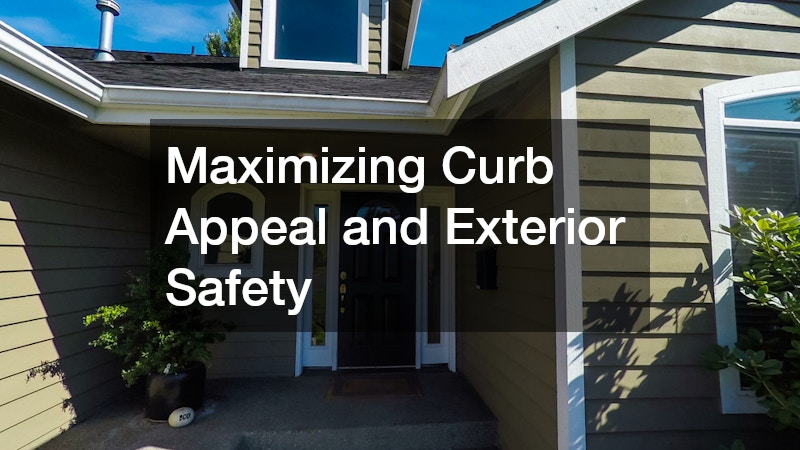
Maximizing Curb Appeal and Exterior Safety
First impressions are everything. In the digital age, your “first showing” happens online. If the exterior photo does not look inviting, the buyer will never swipe right to see the kitchen. Beyond aesthetics, the exterior landscape plays a huge role in the perceived safety and maintenance level of the home.
Clearing Hazards and Opening Sightlines
Overgrown vegetation can make a house feel claustrophobic, dark, and damp. It can also hide the best architectural features of your property. More critically, trees that overhang the roof or brush against siding are a threat to the structure. They provide a bridge for squirrels and pests to enter the attic, and their roots can threaten the foundation.
Take a hard look at the trees on your property. Are there dead limbs hanging precariously? Is there a massive tree blocking the view of the front door? Hiring a tree removal company is often necessary to “limb up” the canopy or remove trees that are dead or dying. Removing a sick tree eliminates a liability; if that tree were to fall during escrow, it could derail the entire sale. Furthermore, clearing out the heavy canopy allows more natural light to hit the house, making the interior feel brighter and more welcoming.
Creating a Lush, Low-Maintenance Look
The lawn is the carpet of your exterior. You would not try to sell a house with stained, ripped carpet in the living room, yet many sellers ignore a patchy, weed-infested lawn. A neglected lawn signals to the buyer that “this house is a lot of work.”
You do not need to achieve golf-course perfection, but the lawn should be green, neat, and edged. Two weeks before photos are taken, bring in a lawn care company for a “listing prep” service. This goes beyond a standard mow. Ask for deep edging along driveways and flower beds—this crisp line provides a subconscious feeling of order and cleanliness. Have them apply a fertilizer treatment to green up the grass quickly. If you have dead patches, ask them to patch them with sod. Mulching is another high-impact, low-cost improvement. A fresh layer of dark mulch provides a beautiful contrast against the green grass and the house, making the landscaping pop in photos.

Defining Boundaries and Hardscaping
Hardscaping refers to the non-plant elements of your yard: driveways, walkways, patios, and fences. These elements define how a person moves through the property and where the boundaries lie. When these are in disrepair, the property feels messy and undefined.
Fixing Trip Hazards and Driveway Fatigue
Your driveway and front walkway set the tone for the entire showing experience. As the buyer walks from their car to the front door, they are looking down. Cracked concrete, heaving slabs, or weeds growing through expansion joints look terrible. Worse, uneven concrete is a safety hazard that FHA and VA appraisers will flag immediately, potentially halting financing until it is fixed.
If your concrete is sunken or uneven, you don’t necessarily need to tear it all out. A specialized concrete contractor can often perform “mud-jacking” or foam leveling to raise the slabs back to level for a fraction of the cost of pouring new concrete. If the damage is cosmetic—like flaking or discoloration—power washing can do wonders. However, for severe cracking, pouring a new walkway is a worthwhile investment. It creates a crisp, new path that literally leads the buyer to a sale.
Framing the Backyard Oasis
For many buyers, especially those with dogs or young children, a fenced backyard is a non-negotiable requirement. A fence provides privacy, security, and a clear definition of what “yours” is. If your fence is leaning, missing slats, or covered in algae, it becomes an eyesore rather than an asset.
Walk your perimeter. If the fence is structurally sound but looks gray and tired, a power wash and stain can revive it. If it is leaning, you need to call fence companies to replace the rotted posts. If you do not have a fence, consider installing one, or at least a portion of one, to create a private patio area. You don’t always need to fence the entire acre, but creating a “secure zone” can be a major selling point. In competitive markets, the difference between a house with a fenced yard and one without can be the deciding factor for a family.

Revitalizing the Kitchen Without the Gut Job
The kitchen is the heart of the home, and it is the room that sells the house. However, it is also the most expensive room to renovate. A full kitchen renovation can easily cost $50,000 or more, and it is rare to get a 100% return on that investment when selling. The goal is not to build the buyer’s dream kitchen, but to remove the reasons they might hate your current one.
The “Facelift” Approach to the Heart of the Home
Sellers often think they need to knock down walls to sell a home. This is rarely true. Most of the time, the layout is fine; the finishes are just dated. You want to focus on cosmetic kitchen remodeling that modernizes the look without the heavy demolition.
Start with the countertops. If you have old laminate or tile with grout lines, replacing it with a mid-range quartz or granite is a game-changer. It instantly elevates the perceived value of the whole room. Next, look at the backsplash. A simple white subway tile is inexpensive, timeless, and brightens up the space. Finally, update the hardware. Swapping out tarnished brass handles for modern brushed nickel or matte black pulls is a cheap upgrade that you can do in an afternoon, but it makes the cabinetry look significantly newer.
Dealing with Dated Storage
The biggest visual element in the kitchen is the cabinetry. If your cabinets are dark, orange-tinted oak or thermofoil that is peeling, they will drag down the value of the home. Replacing cabinets is incredibly expensive and messy.
A smarter alternative is to hire a professional cabinet company to refinish or reface them. Refinishing involves professionally spraying the existing doors and boxes with a durable, factory-grade paint. This can transform a dark, dungeon-like kitchen into a bright, modern “farmhouse” style kitchen for a third of the cost of new cabinets. Re-facing involves keeping the boxes but putting on brand-new doors and drawer fronts. Both options result in a kitchen that looks and smells brand new, satisfying the buyer’s desire for a modern aesthetic without the price tag of a total remodel.

Flooring: The Canvas of the Home
Flooring is the one surface that you touch every single moment you are inside the house. It covers the most square footage and has the biggest impact on the “freshness” of the home. Old carpet traps odors—pet smells, cooking grease, and dust—that you might be “nose blind” to, but a buyer will smell the second they walk in.
Eliminating the “Ick” Factor
If you have wall-to-wall carpet that is more than five years old, seriously consider replacing it or removing it. Buyers today generally prefer hard surfaces in the main living areas. If you have hardwood floors hidden under carpet, rip up the carpet! Even if the wood needs work, buyers would rather see imperfect hardwood than perfect old carpet.
For the best results, bring in a flooring company to assess your options. If you have hardwoods that are scratched or dull, a screen-and-recoat is a quick, dust-free process that restores the shine. If the floors are stained, a full sanding and refinishing is worth the cost. If you are on a concrete slab or have damaged subfloors, Luxury Vinyl Plank (LVP) is the current gold standard for resale. It is waterproof, durable, looks like real wood, and is relatively affordable to install. The key is consistency. Try to run the same flooring throughout the main level to eliminate transition strips, which break up the visual flow and make the house feel smaller.
Conclusion
Preparing a home for sale is a business transaction. It requires detaching yourself emotionally from the memories you have made and looking at the structure as a product on a shelf. The goal is to make that product as appealing, safe, and “worry-free” as possible for the consumer.
While it is tempting to save money by doing everything yourself or hiring the cheapest handyman available, this strategy often backfires during the inspection phase. Smart sellers understand the value of strategic outsourcing. By hiring the right professionals to handle the structural, mechanical, and aesthetic heavy lifting, you are not just fixing a house; you are building a case for your asking price.
Start this process early. Good contractors are busy, and you want to have these projects wrapped up at least two weeks before you list. This buffer gives you time for deep cleaning and staging. When you list a home that smells fresh, looks maintained, and comes with a stack of warranties and receipts from reputable pros, you are positioning yourself for a quick sale and a maximum return on your investment.